Our Story

Gleichenia (gleichenia.com) is a Tokyo-based contemporary jewelry unit founded by Kanako Ikegaya and Yu Ikegaya. We make one-of-a-kind jewelry and objects by hand, working primarily with glass fired using a technique called pate de verre and with silver. We started in 2020 and held our first exhibition in 2021. Since then, we have participated in 29+ exhibitions and pop-up events across Japan.
Our glass is made using our approach to pate de verre: we mix crushed glass with color powder and pigment, pack it into a plaster mold, and fire it in a kiln. After firing, we cut and grind each piece by hand. Each silver component is also hand-formed — shaped individually, not cast in molds. From concept to finished piece, we handle everything ourselves: making, selling, and photographing all our work as a two-person unit.
Where Two Become One — The Meaning Behind Our Name
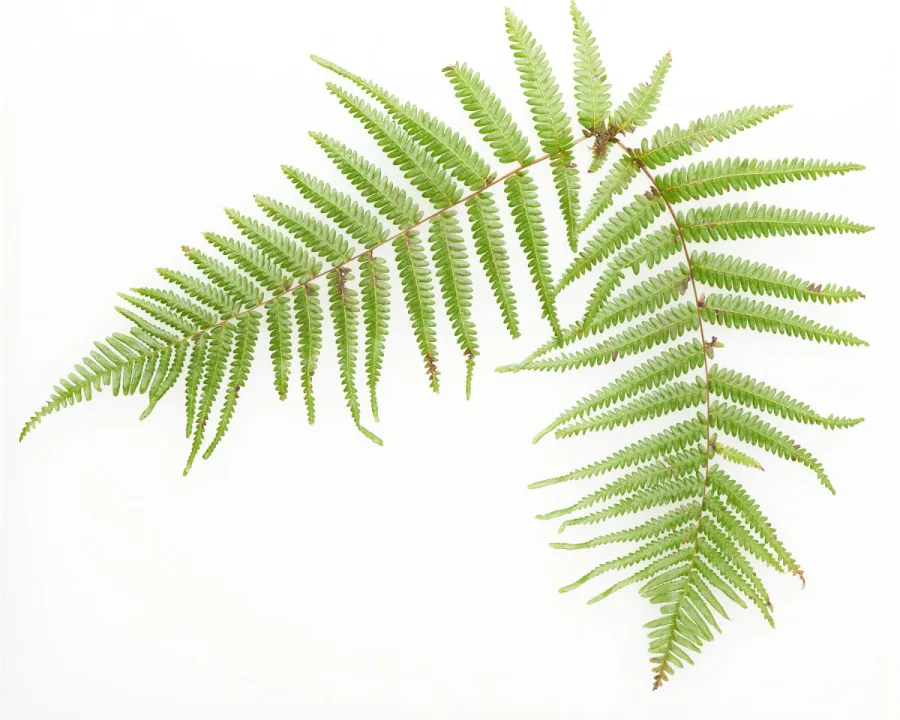
Gleichenia japonica — known in Japanese as urajiro — is a fern that grows quietly in damp forest air. It is one of Japan's traditional New Year plants, placed on decorations as a symbol of purity, sincerity, and longevity. The name urajiro literally means "white back," referring to the silver-white underside of its fronds. What drew us to this plant is how it grows: two leaves extending outward from a single stem, forming a symmetrical pair.
We saw ourselves in that structure. Our name comes from Gleichenia, the scientific name of this fern family.
Art and design. Sculpture and spatial design. Two different directions growing from one stem. When paired things come together, something new emerges — an expression that belongs to neither side alone. Kanako studied sculpture at Wimbledon College of Arts (University of the Arts London), and Yu studied interior and spatial design at Chelsea College of Arts (University of the Arts London). After following separate paths, we founded Gleichenia together in 2020.
Just as fern spores land on new ground and take root wherever they fall, we aim to create work that is not bound by background, age, gender, or established expectations. Each piece of jewelry takes on a new story through the person who wears it.
Listening to the Material — How We Make Glass and Silver Jewelry
Pate de Verre — Our Approach to Glass
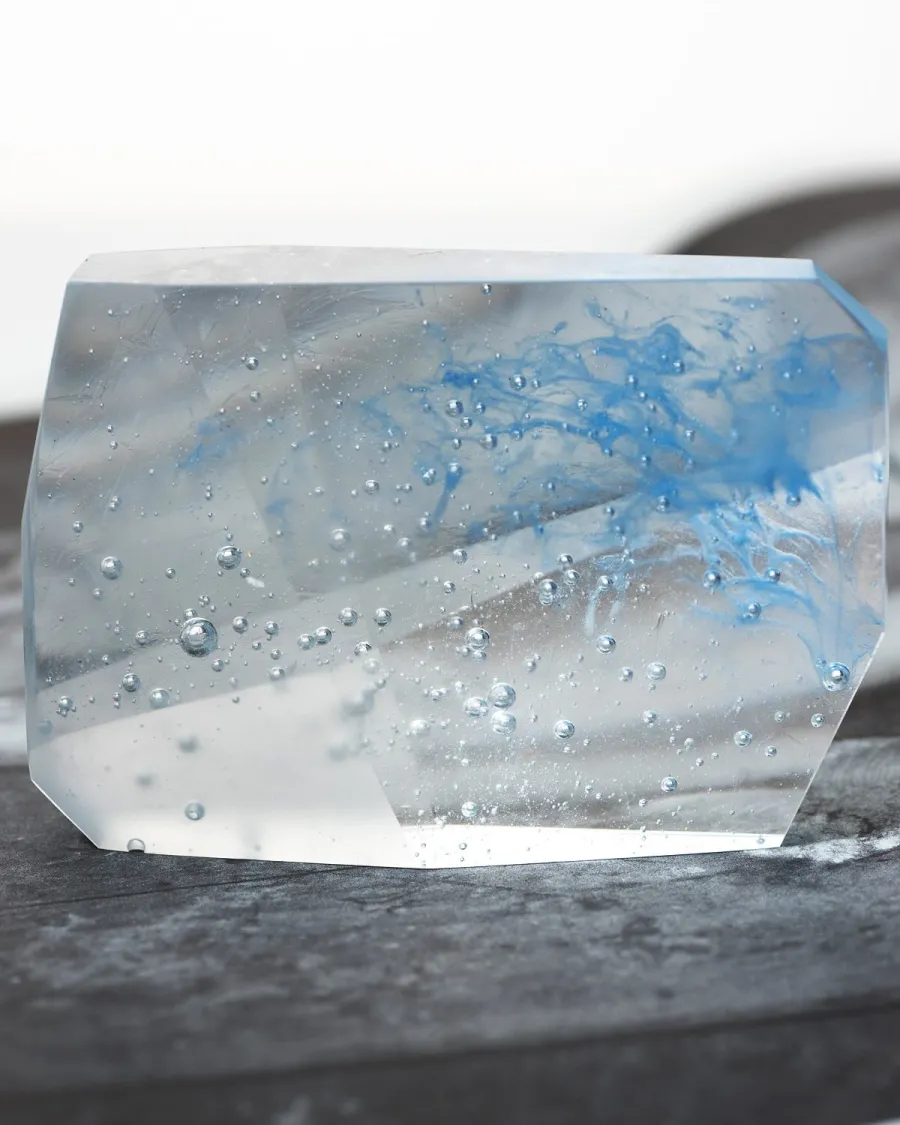
Pate de verre is a French term meaning "glass paste." Our approach may not be traditional pate de verre in the strict sense — we mix crushed glass with color powder and pigment, pack it into a plaster mold, and fire it in a kiln. After firing, we break open the mold and cut and grind each piece by hand to reach its final form. The process can take several days from start to finish.
No two pieces come out the same — each firing produces its own patterns, textures, and depth. We also work with a phenomenon called devitrification, where glass deliberately loses its transparency during firing. This creates a cloudy, marbled quality that gives each piece a character beyond clear glass. It is a quality that sits between intention and chance.
Silverwork — Formed by Hand
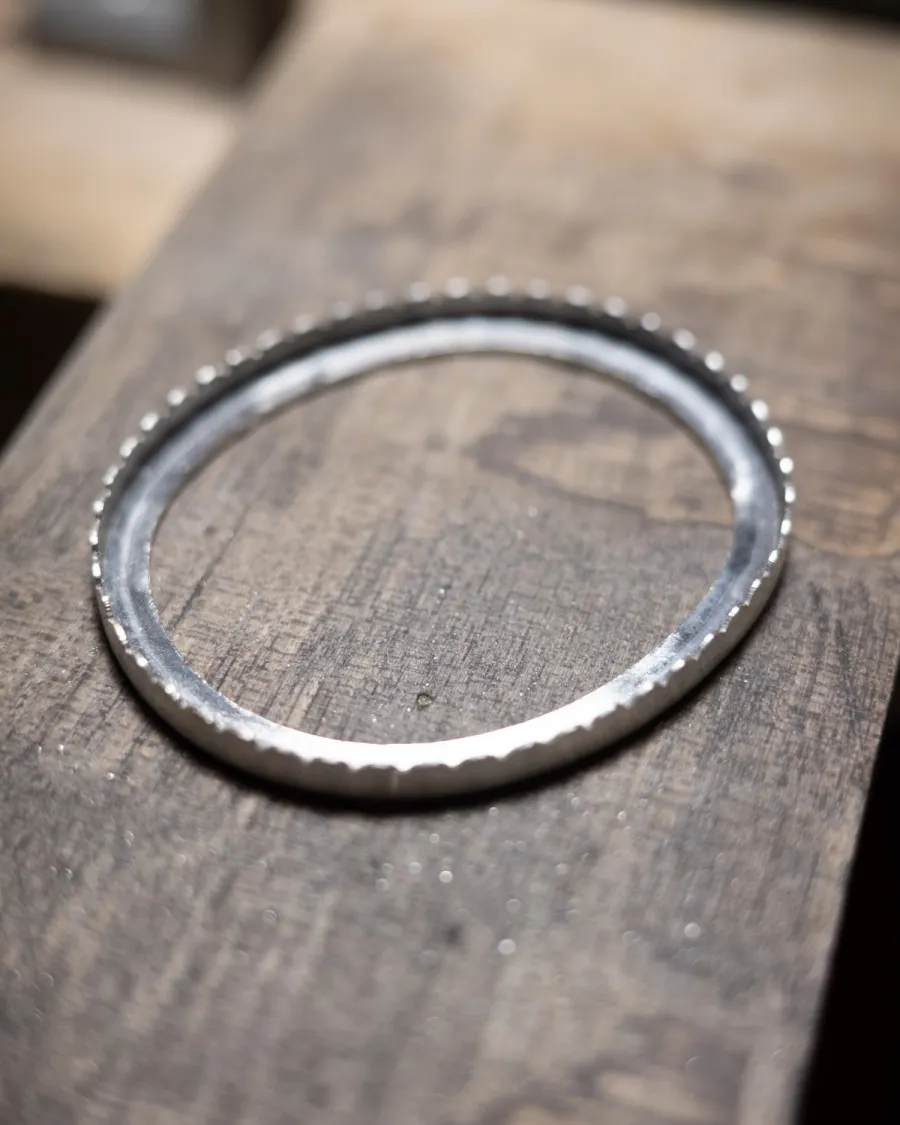
Our silver is shaped by hand, not cast. Each silver component is individually formed, filed, and finished. We rarely draw design sketches. Instead, we develop visual concepts through collage, then work directly with the material — feeling its form and finding the right shape through the making process itself.
Kanako specializes in glass (pate de verre) and enamel, having trained under a glass artist after studying sculpture. Yu specializes in glass and metalwork (silversmithing), having trained under a metalsmith after studying spatial design. Between us, we cover the full range of our production. We choose the technique that best serves each piece — glass, metal, or other materials — and approach each project experimentally. Nearly every piece of Gleichenia jewelry is one of a kind.
Two Perspectives, One Form
Kanako's eye is shaped by her training in sculpture. She is drawn to the forms hidden inside materials — to distortion, creases, and irregularity. What is imperfect often holds the most character, and she finds depth and life in those qualities.
Yu's eye is shaped by his training in spatial design. He considers how a piece of jewelry sits within a person's daily life, how it interacts with the body and the atmosphere of a space. He handles the technical judgment — assessing whether an idea is structurally feasible — and manages the engineering side of production.
Our process typically begins with Kanako's ideas and drawings, which Yu then translates into technical form. The final concept and language for each piece come together as we both step back and look at the work as a whole. We discuss, debate, and often settle on a third option that neither of us originally proposed — what we call Plan C.
What emerges from these two perspectives is not simply decoration. It is work that quietly reflects the individuality of whoever wears it. We want each piece to be open to interpretation — worn on the body, displayed in a room, used however the owner sees fit. Jewelry that invites a sense of play, without dictating a single purpose.