Glass Objects Born from Fallingwater
Fallingwater, designed by architect Frank Lloyd Wright in 1935, was built around a specific idea: bring the outside world into the house and lead the inside of the house to the outside. The building breaks down the boundary between interior and exterior.
For the WRIGHT series, we started from the material that literally sits at this boundary in architecture: window glass. Glass is transparent and solid at the same time — it separates inside from outside while connecting them visually.
There is a connection worth noting here. Wright was deeply influenced by Japanese architecture and the concept of ma (間) — the Japanese idea of meaningful emptiness or interval, where the space between things is not a void but an active, purposeful element. Ma shapes how rooms relate to each other and how a building relates to its surroundings. Wright's open floor plans and his integration of nature into built space reflect principles he took from Japanese architectural tradition. In making glass objects inspired by Wright, we are bringing these ideas full circle — from Japan to Wright, and from Wright back to our Tokyo studio.
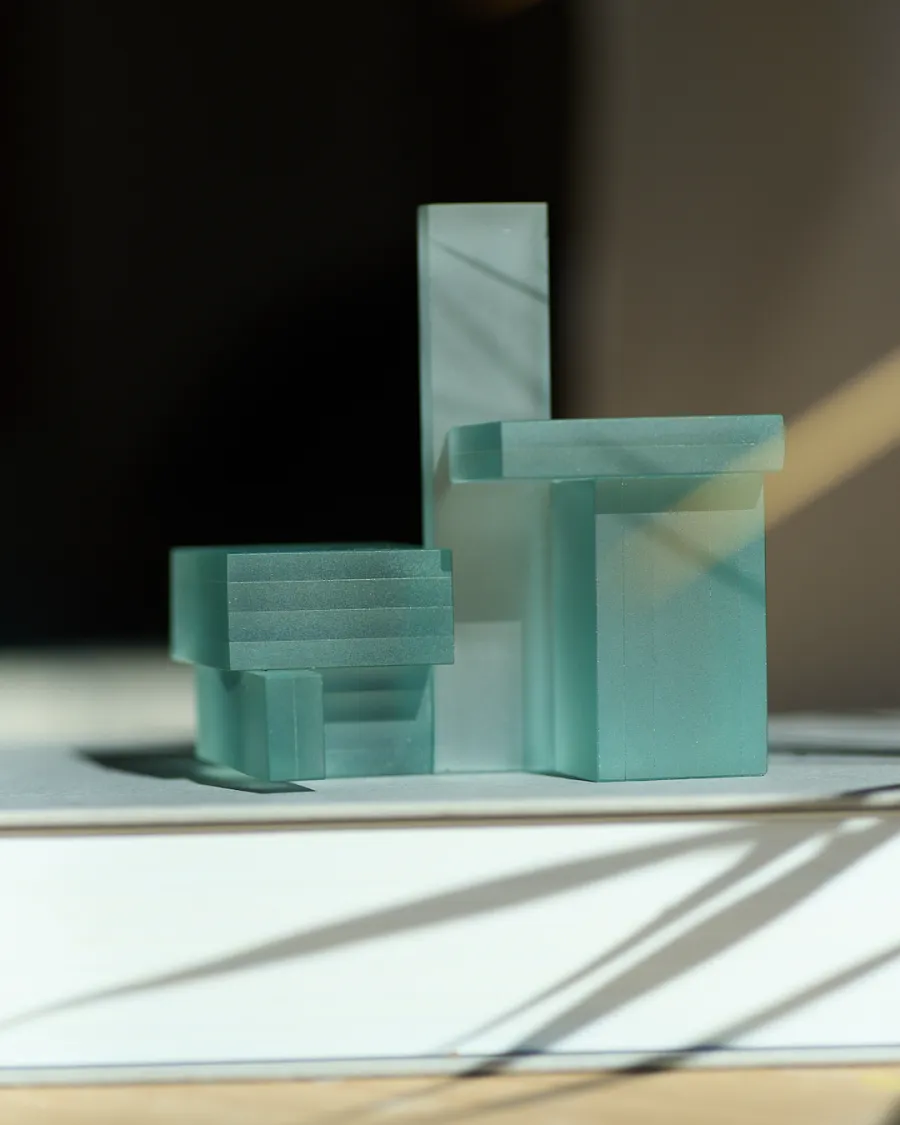
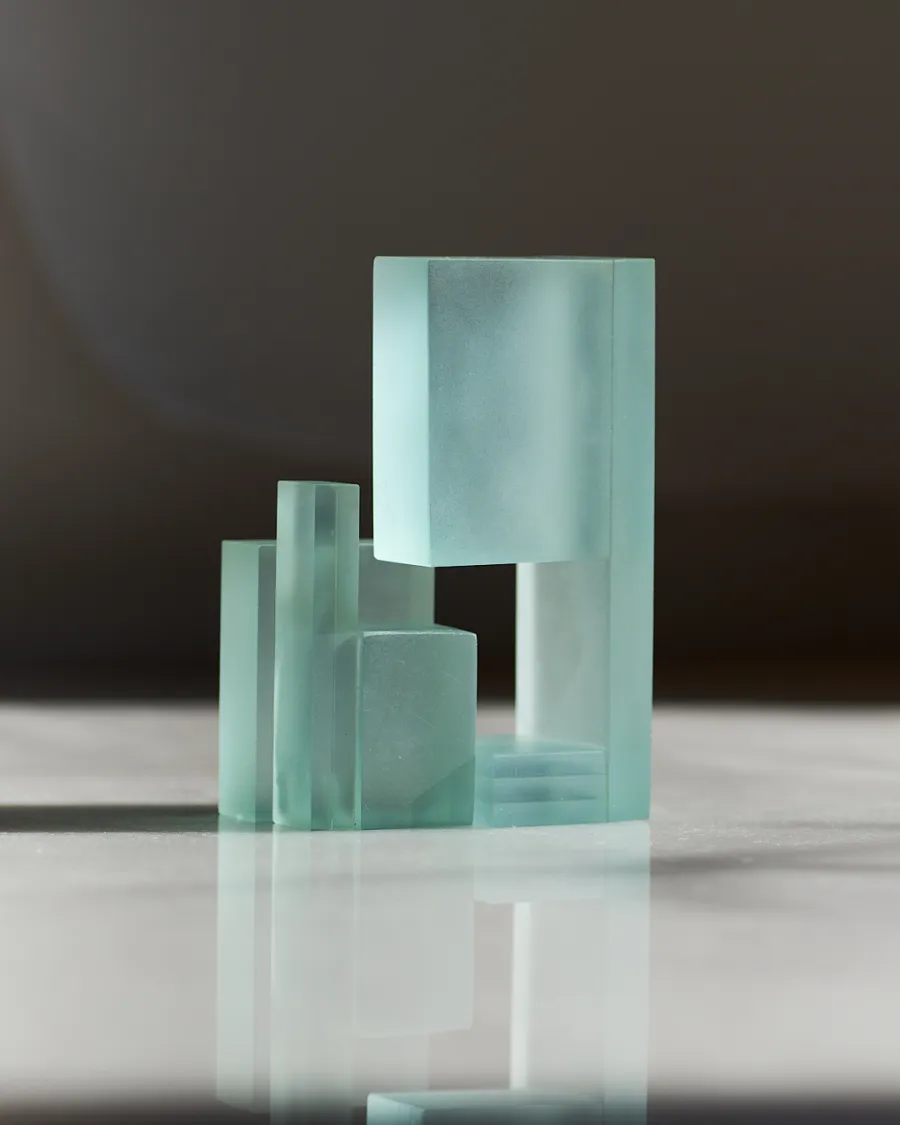
Shared Surface — Float Glass Cut and Polished
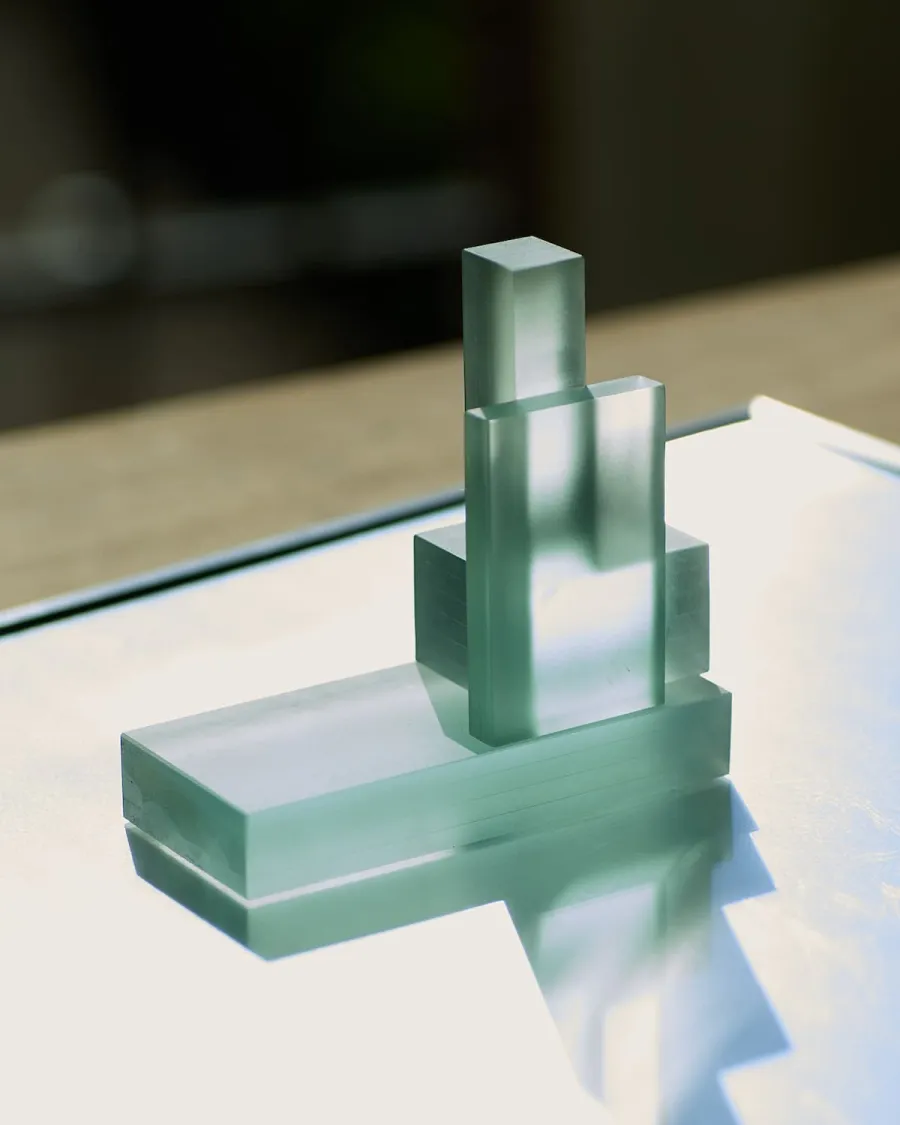
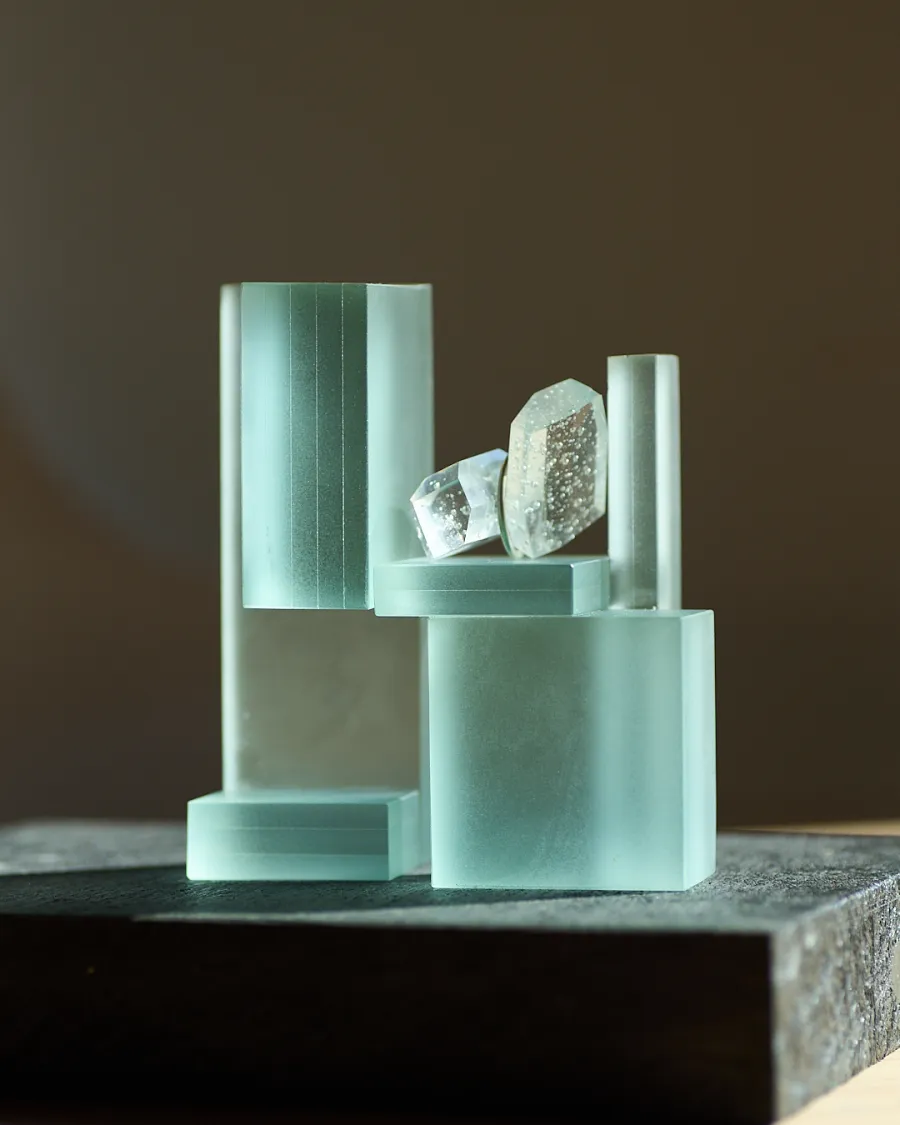
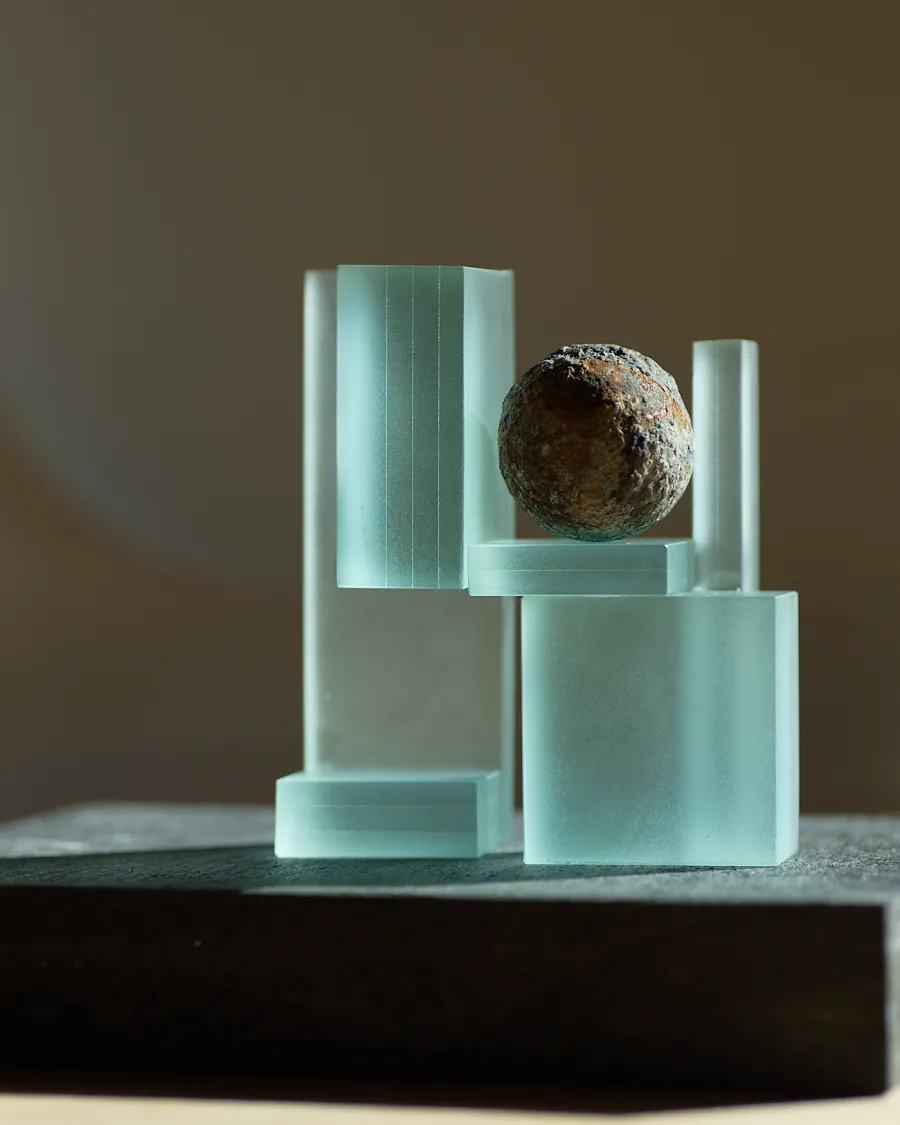
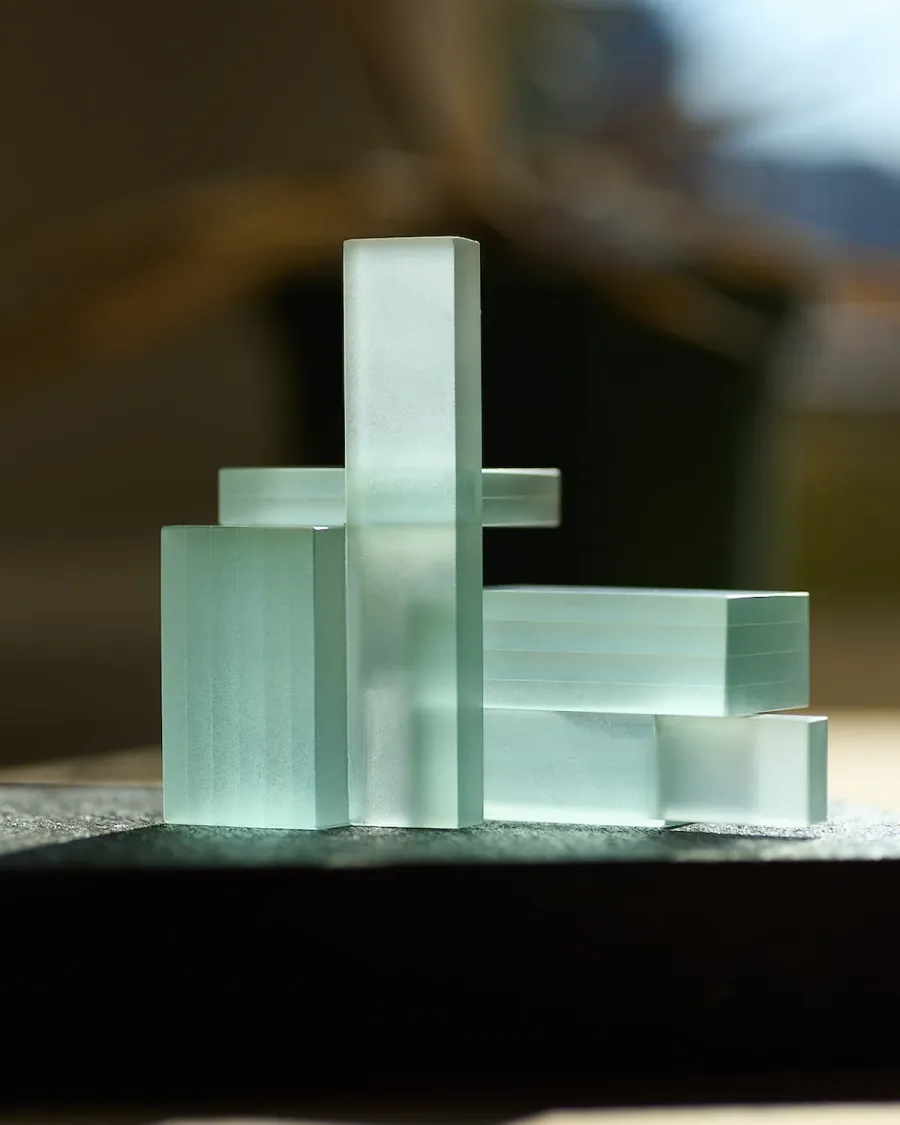
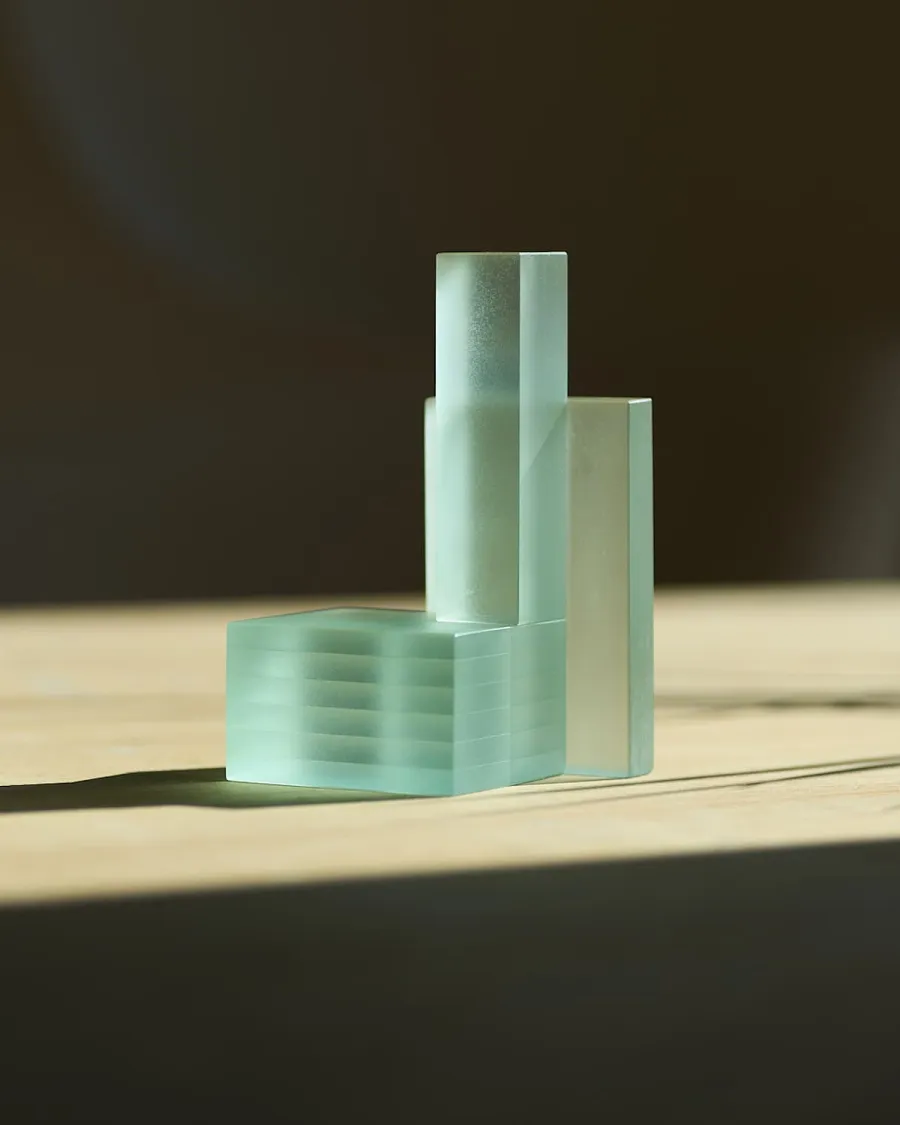
Float glass is an industrial material — transparent, uniform, inorganic — found in architecture and everyday objects. We transform it through repeated cutting and matte polishing by hand. The horizontal lines suggest floating cantilevered beams. The asymmetrical, connected structure follows Wright's concept of "organic unity with space."
The matte-polished surfaces reduce the hard industrial quality of the glass, giving it a softer feel that makes one want to pick it up and handle it.
Layered Light — Three Orientations, Endless Expressions
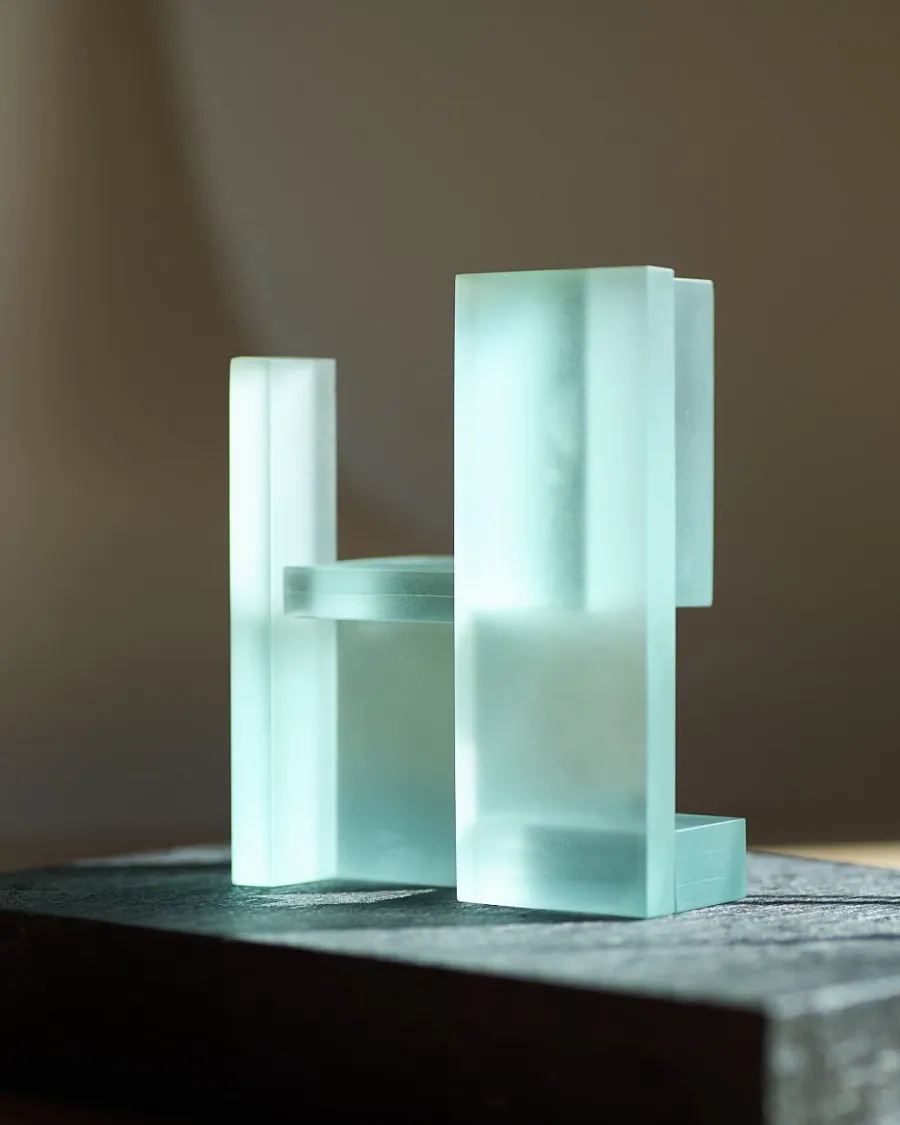
When held up to light, the WRIGHT objects show faint lines in layers, producing continuous bands of light blue. Each object can be placed in three orientations — vertical, horizontal, and upright in height. Changing the orientation changes the shadows and silhouettes that extend into the surrounding space.
Placed near a window, the objects respond to natural light as it shifts through the day. They work as a small-scale version of the principle behind Fallingwater itself — making the boundary between outside light and interior space something visible and present.