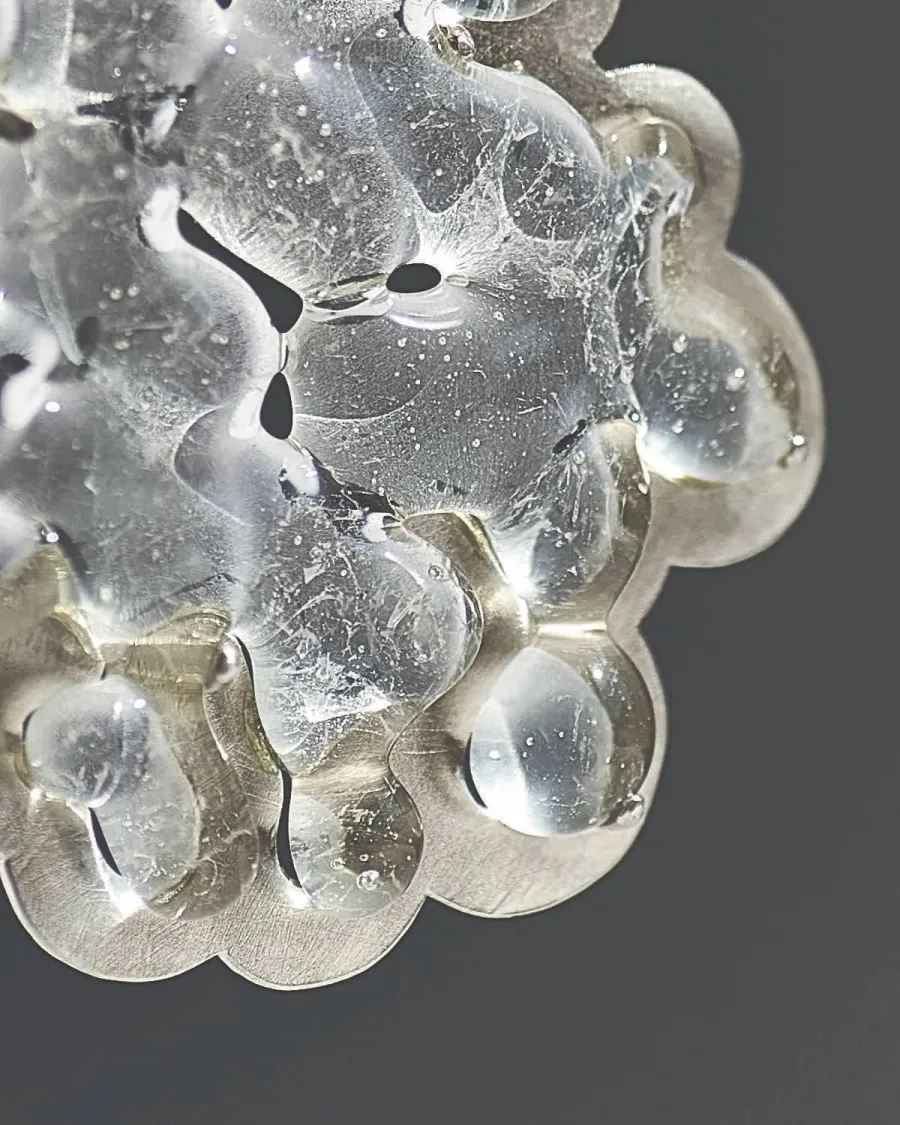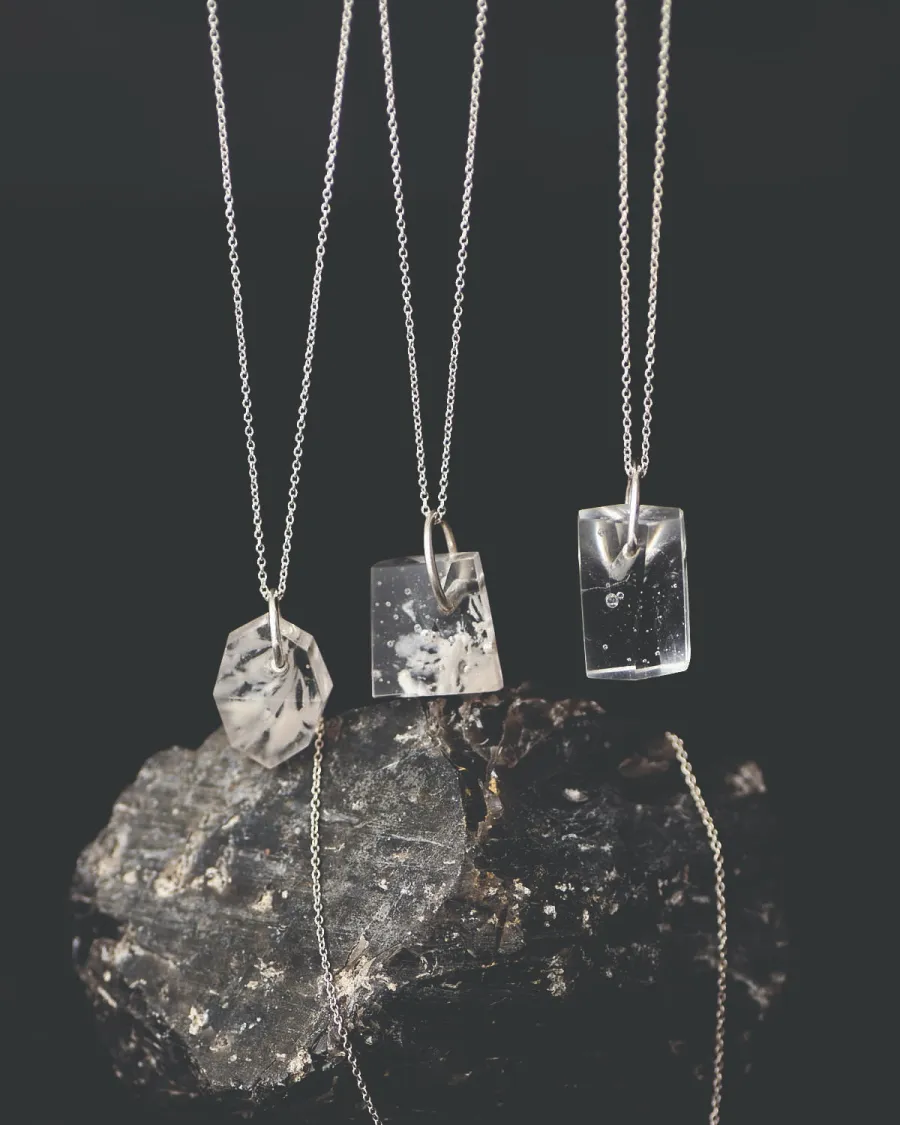
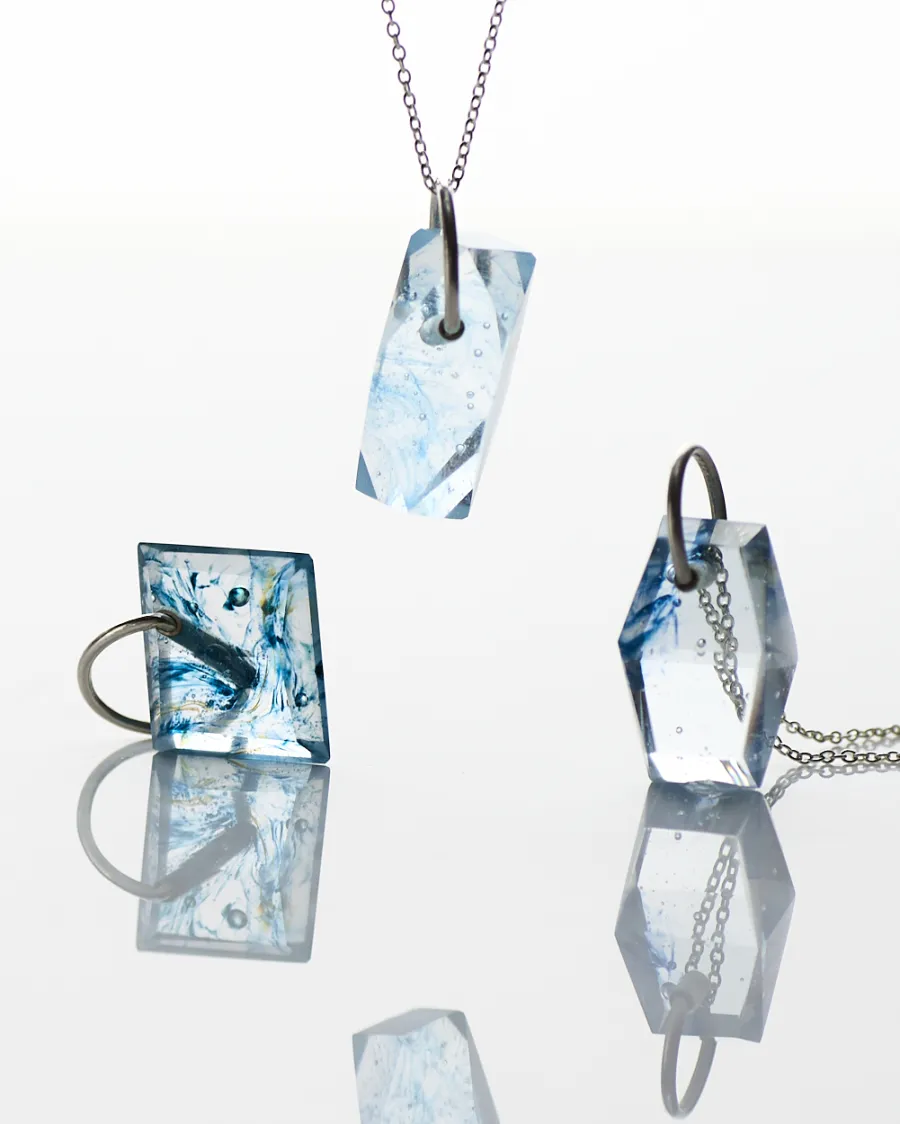
Silver pendant piercing through glass / Penetration
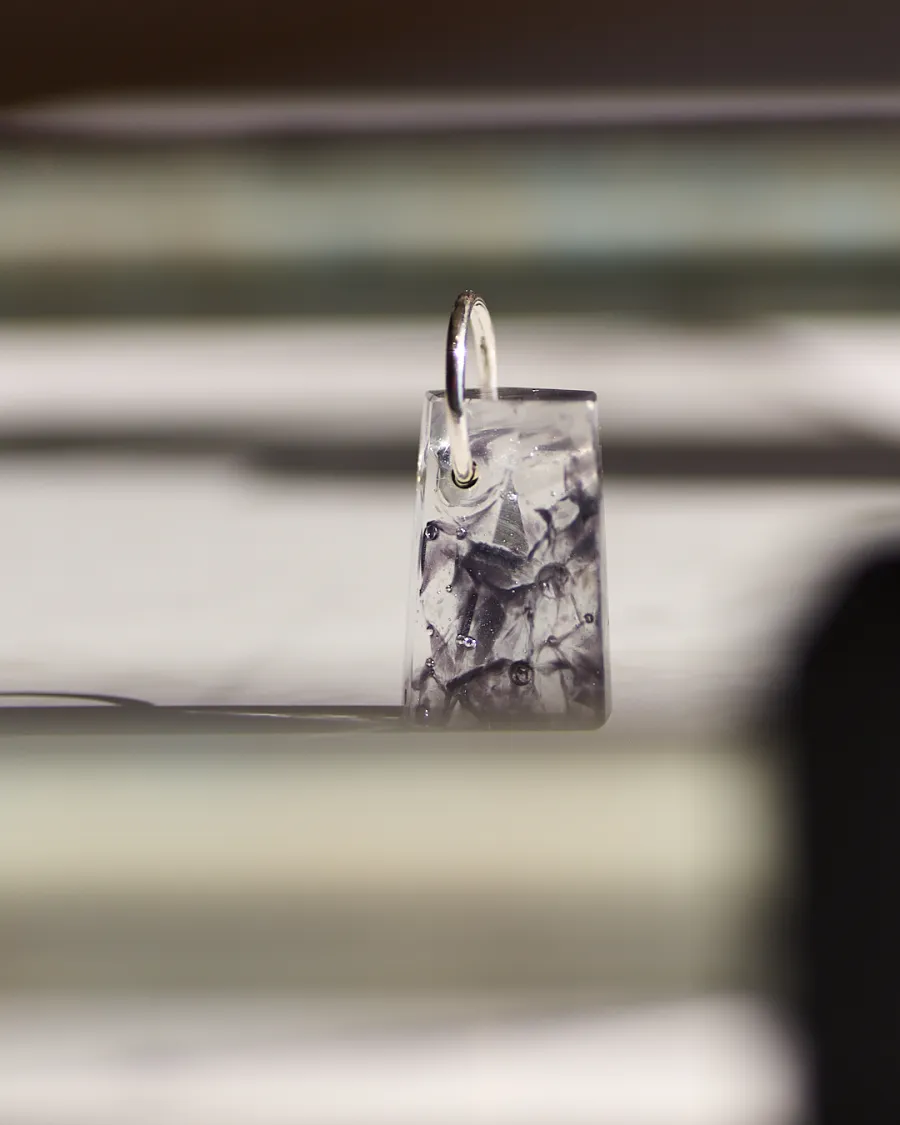
HENGE derives from an Old English word meaning "to hang." The wisdom found in ancient structures for lifting heavy stones into the air. Drawing that tension and balance into jewelry scale became the starting point for the HENGE pendant.
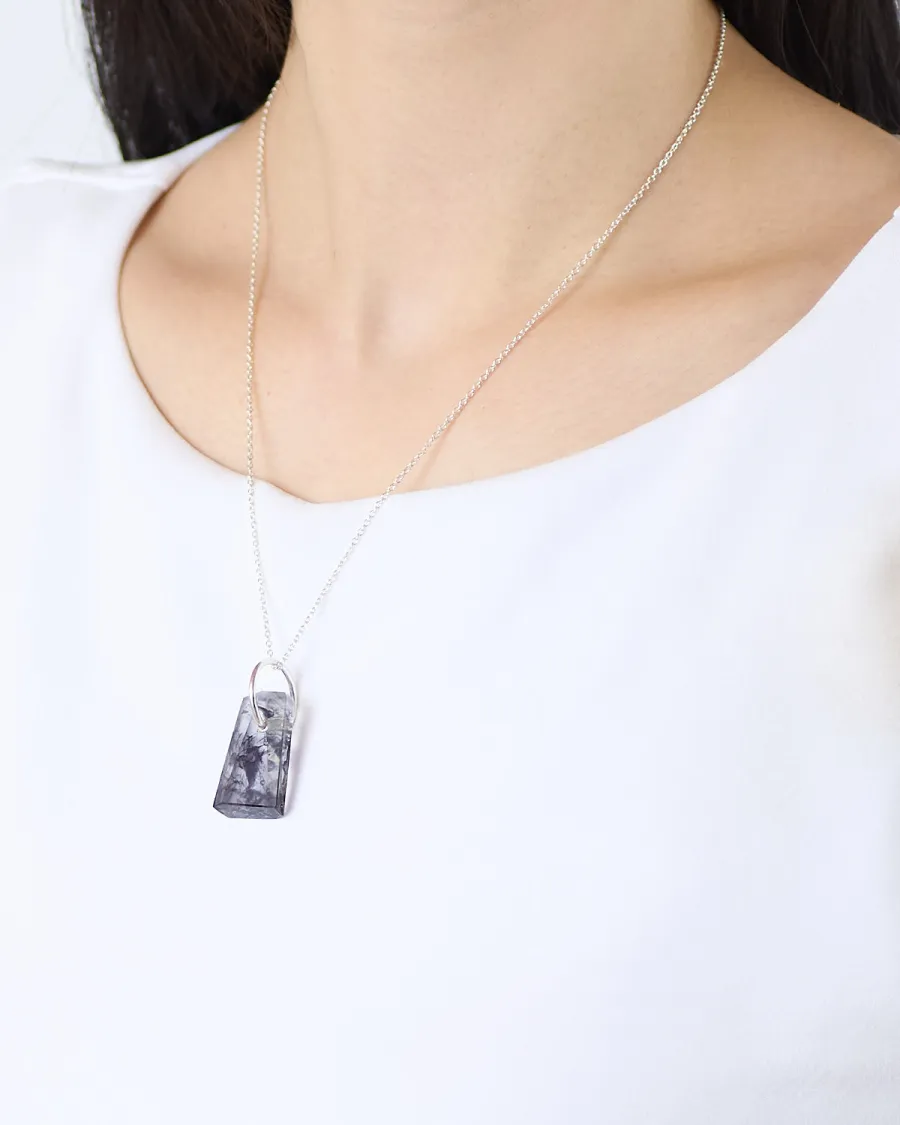
How to make something complex appear simple. Through repeated prototyping, we arrived at a floating structure where a hole is pierced through polyhedral glass made using the pâte de verre technique, with thin silver pipes and silver rings threaded through. Showing the supporting mechanism as it is, is a characteristic of the HENGE collection.
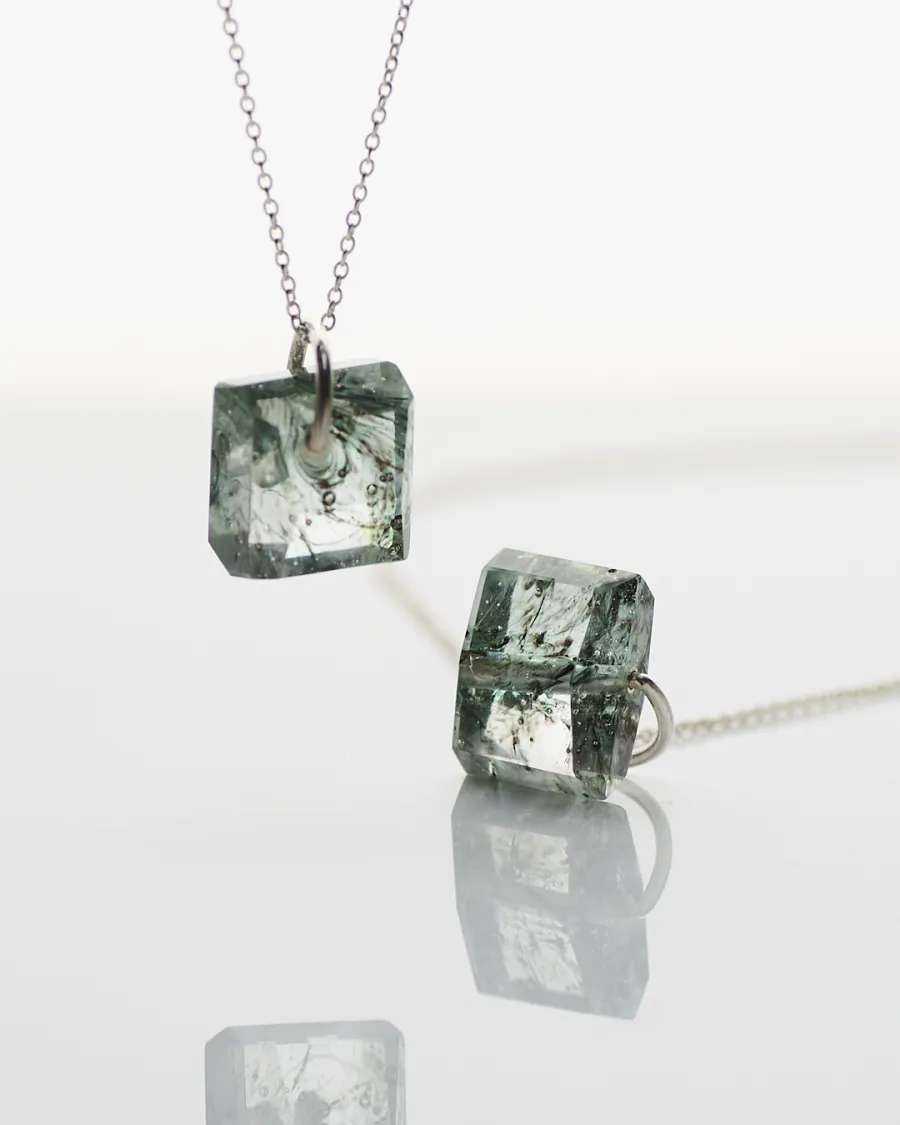
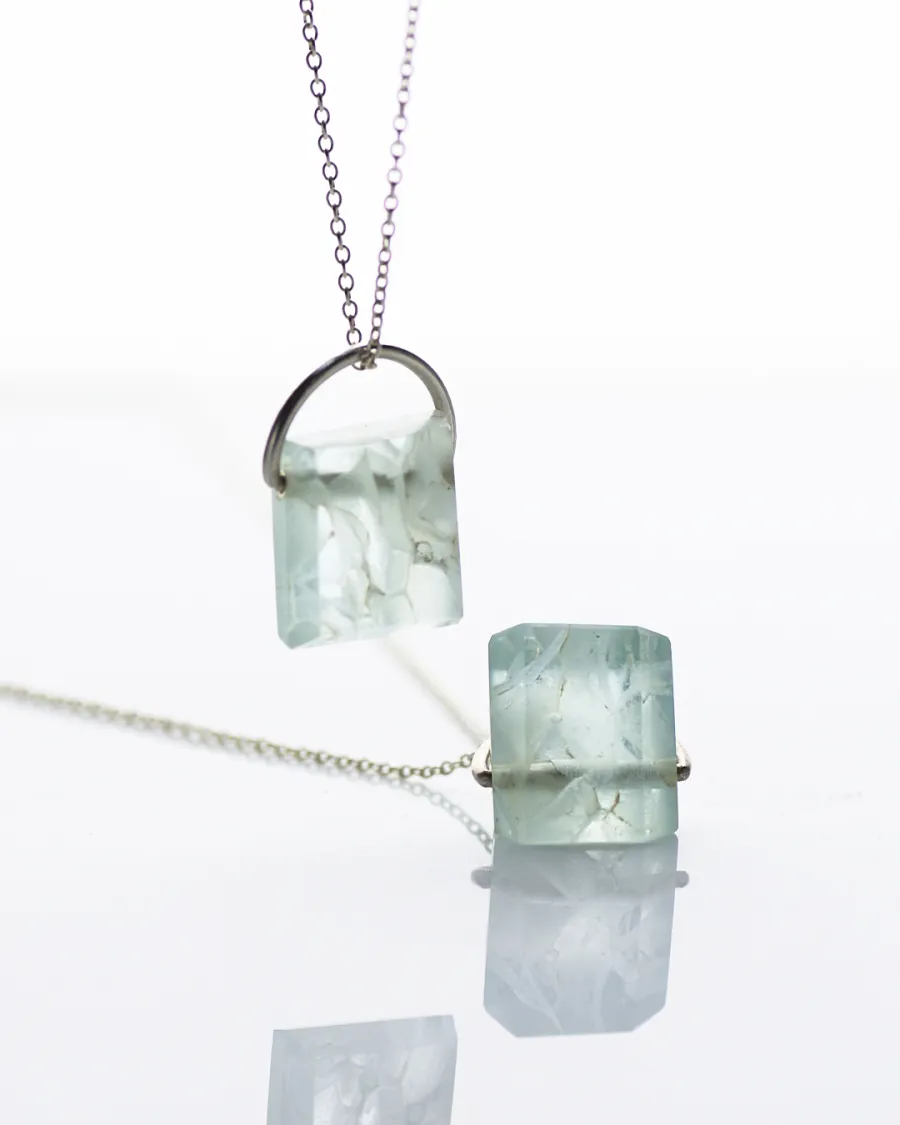
Light and tension
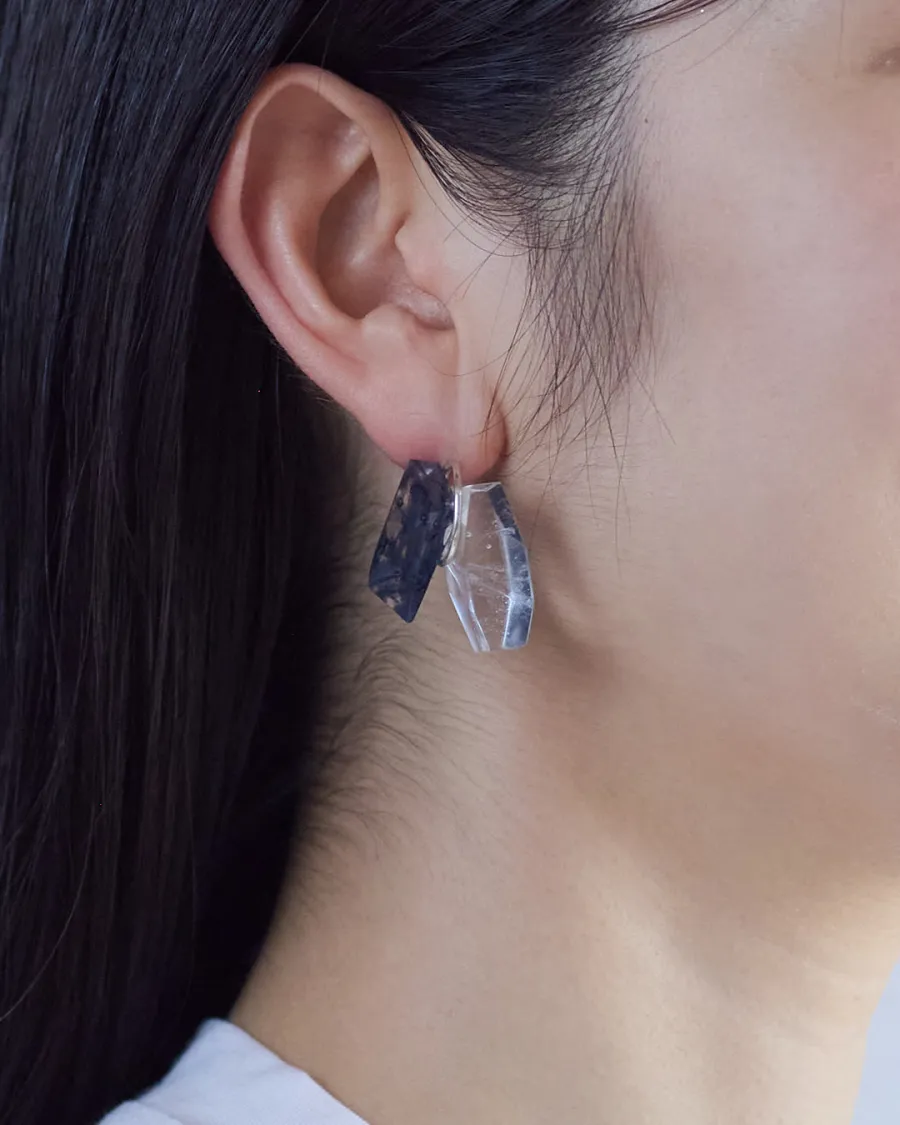
When worn, the glass subtly changes direction according to the wearer's posture. The movable silver ring changes the angle of light according to body movement, revealing different expressions on each face of the polyhedron. The balance of lightness and tension created by the silver curves and polyhedral glass. It quietly radiates a certain presence in daily wear.